

If you’ve never had wallpaper installed professionally before, it’s fair to wonder:
What am I actually paying for?
From the outside, wallpapering can look straightforward — measure, cut, stick, done. But in reality, a professional installation involves a lot more behind the scenes. And it’s those details that make the difference between a clean, long-lasting finish and one that starts peeling or misaligning within months.
If you’re comparing DIY vs hiring a professional, or simply want to understand the process, here’s exactly what goes into a professional wallpaper installation.
Wall Assessment and Preparation
Before any wallpaper goes up, the first step is assessing the condition of your walls.
A professional will check for:
- Cracks, dents or uneven surfaces
- Moisture issues
- Old paint or residue
- Previous wallpaper
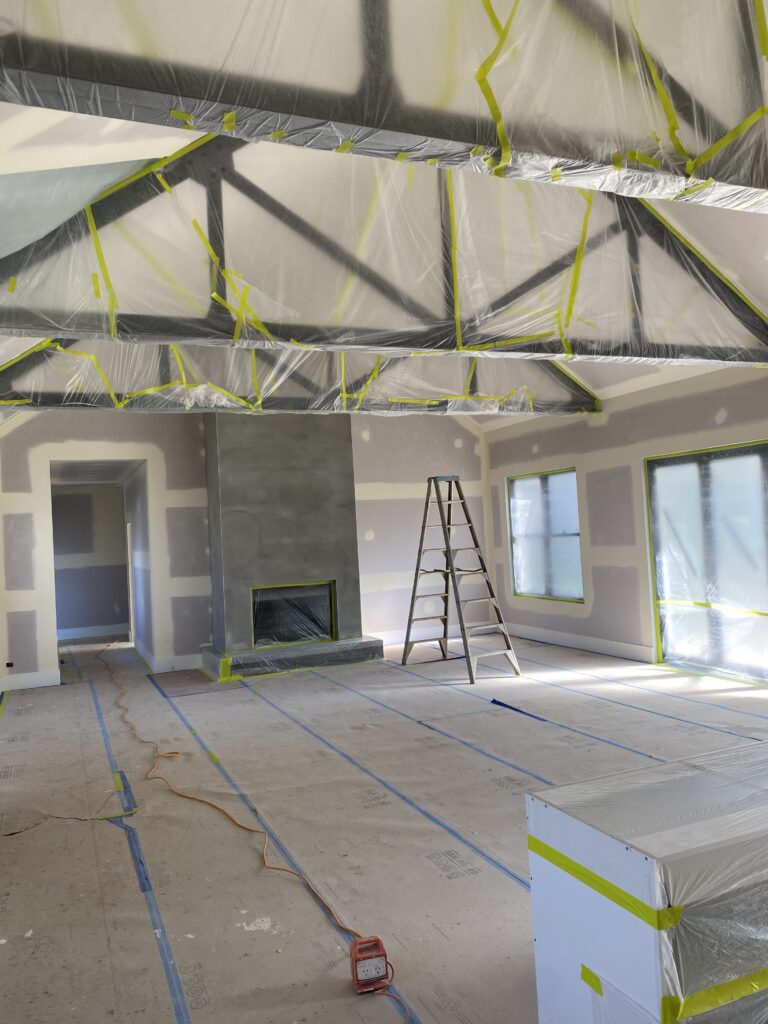
From there, preparation begins. This can include:
- Filling and sanding imperfections
- Smoothing rough areas
- Cleaning the surface
- Applying a suitable primer
This step is critical. Wallpaper doesn’t hide flaws — it highlights them. A perfectly smooth surface ensures the final result looks clean and consistent.
Measuring and Planning the Layout
Wallpaper isn’t just applied randomly. Each drop (strip) needs to be planned in advance — especially with patterned designs.
This stage includes:
- Measuring wall dimensions accurately
- Calculating how many drops are needed
- Planning where patterns will start and finish
- Avoiding awkward joins in visible areas
For example, a professional will ensure the pattern is centred on a feature wall or aligned properly around windows and doors.
Poor planning leads to mismatched patterns or wasted material — both costly mistakes.
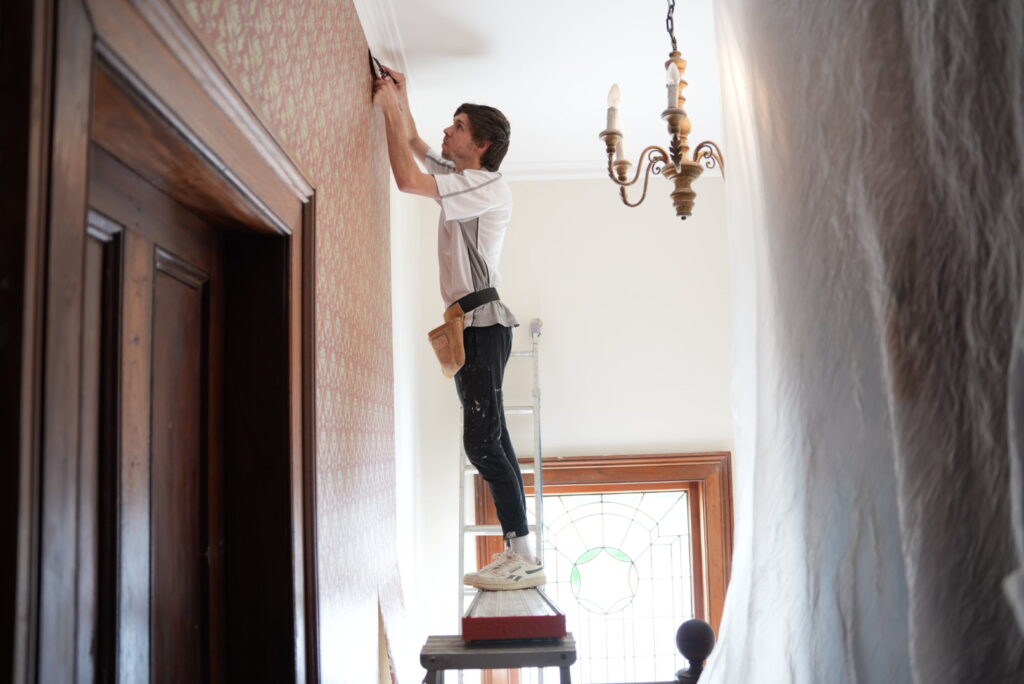
Cutting and Pattern Matching
Once the layout is planned, each strip is carefully cut.
For patterned wallpaper, this involves:
- Matching each drop to the next
- Allowing for pattern repeat
- Minimising visible joins
This is one of the most time-consuming parts of the process. Even a small misalignment can be noticeable once the wallpaper is on the wall.
Professionals take the time to get this right before anything is applied.
Adhesive Application and Installation
Depending on the type of wallpaper, adhesive is either applied to the wall or the back of the paper.
Installation involves:
- Positioning each drop precisely
- Smoothing out air bubbles
- Ensuring edges are tight and clean
- Aligning patterns seamlessly
This stage requires precision and patience. Rushing can lead to bubbles, lifting edges, or visible seams.
Professional installers use specialised tools to achieve a smooth, even finish.
Trimming and Finishing
Once the wallpaper is in place, it needs to be trimmed neatly around edges and obstacles.
This includes:
- Skirting boards and cornices
- Power points and switches
- Window and door frames
Clean cuts are what give wallpaper that sharp, professional look.
At this stage, the installer will also:
- Check for alignment issues
- Smooth any remaining bubbles
- Wipe away excess adhesive
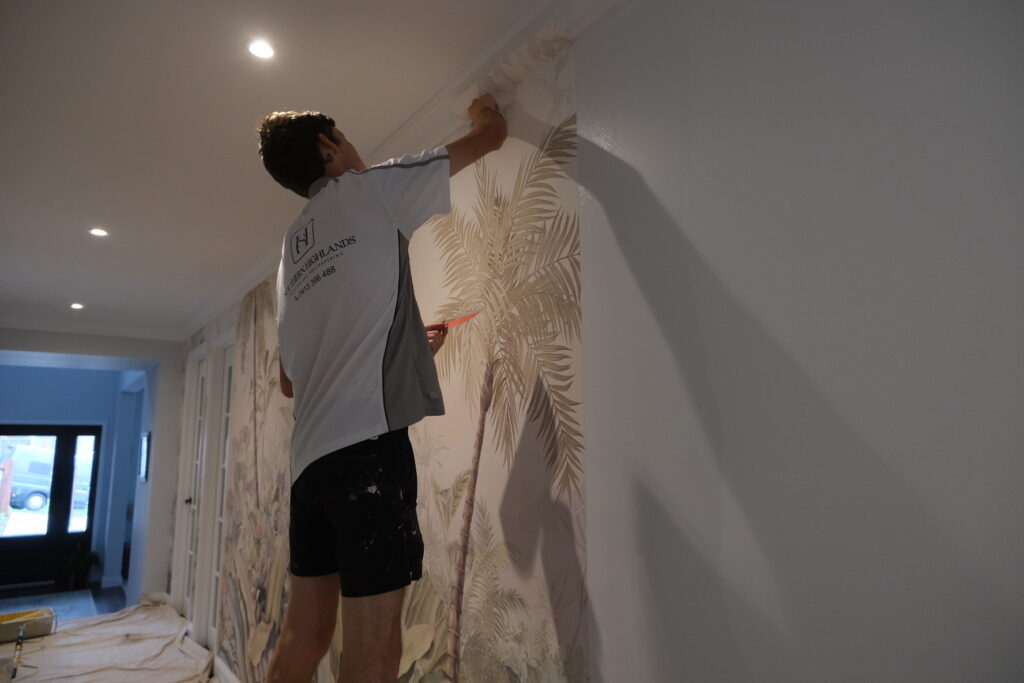
Clean-Up and Final Inspection
A professional job doesn’t end when the wallpaper is up.
The final step includes:
- Cleaning the work area
- Removing offcuts and waste
- Inspecting the finished wall
The goal is to leave the space ready to use — with no mess and no touch-ups needed.
Why This Process Matters
Each of these steps plays a role in how your wallpaper looks — and how long it lasts.
Skipping preparation, rushing pattern alignment, or using incorrect adhesive can lead to:
- Peeling edges
- Visible seams
- Bubbles or lifting
- Reduced lifespan
That’s why professional installation isn’t just about convenience — it’s about getting the result right the first time.
When Is It Worth Hiring a Professional?
Professional wallpaper installation is usually worth it when:
- You’re using patterned or high-end wallpaper
- The wall is a main feature in your home
- The surface isn’t perfectly smooth
- You want a long-lasting, high-quality finish
For smaller or temporary projects, DIY may be suitable — but for anything more permanent, professional installation reduces risk.
Thinking About Wallpaper for Your Home?
If you’re planning a wallpaper project and want it done properly from start to finish, we can help.
At Southern Highlands Painting & Wallpapering, we handle everything from preparation to final installation — ensuring your wallpaper looks clean, aligned, and built to last.